Identity and print
- Wrong-carton detection
- Artwork and colour verification
- Print-presence and print-quality checks
- Best-before and use-by dates
- Batch and lot-code OCR/OCV
- 1D, QR, Data Matrix and GS1 codes
Check artwork, printed data, codes, labels, flap condition and visible contents—then remove the wrong or defective carton automatically.
An in-line carton inspection system uses cameras, code readers and—where useful—checkweighing to confirm that the right carton carries the right artwork, label and production data, is closed as expected and contains the required product at the point where those features can be checked.
Several views can be combined under one recipe. Each result remains linked to the carton until it is accepted, rejected or the line enters a controlled fault state.
The station is placed where the critical features are visible and where a failed carton can still be controlled safely.
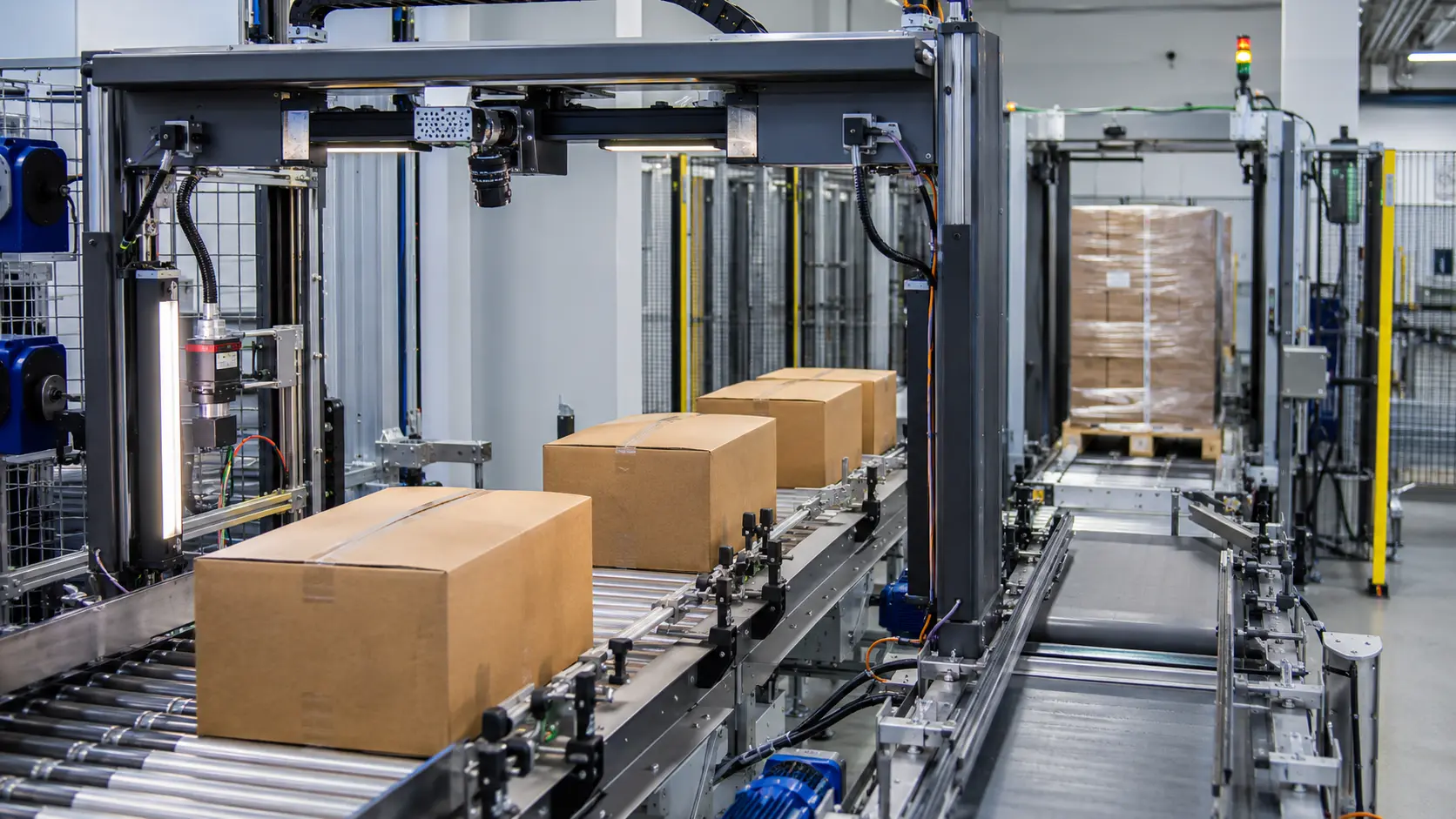
Before loading, inspect carton identity, printed information and the open pack interior.
Before closure, confirm visible products, leaflets, inserts or components where the process exposes them.
After closure, inspect flap position, external labels, codes, artwork and pack geometry.
Use checkweighing after closure where a missing item creates a dependable weight difference.
At case packing, verify carton count, orientation and case-label or code data.
A printed date or code can be clear but belong to the wrong product. The inspection can compare visible text and encoded data with the active job, product recipe or approved database record.
Load the approved product, carton, artwork and expected variable-data recipe.
Read OCR, OCV, barcode or Data Matrix content and check required quality features.
Compare the carton and data with the live production job or database response.
Reject, confirm, record and stop safely if product identity or reject control is lost.
Send carton flats, finished packs, print examples and known failure samples for an application review.
Ask an application question →It can verify carton identity, artwork features, label presence and position, barcodes, Data Matrix codes, dates, batches, lot codes, print quality, flap position and visible contents at accessible process stages.
Yes. Visible artwork, colour, text, codes or a database record can be compared with the active product recipe to identify an incorrect or mixed carton.
Sometimes. Checkweighing can identify a missing item when its weight is distinguishable from normal product and pack variation. Vision can verify contents before closure when the view is accessible.
Yes. OCR can read variable characters, OCV can verify them against expected data, and 1D or 2D code readers can compare encoded information with the product recipe or database.
Send carton samples, artwork, print data, known faults, line speed and process video.