Application checks
- Missing-label detection
- Label-position inspection
- Skewed-label detection
- Front-and-back label verification
- Wraparound label inspection
- Label edge and gap measurement
Catch missing, skewed, misplaced or incorrect labels before the pack leaves the line, with inspection designed for the label geometry and product presentation.
The same label can look very different once applied to a curved, tapered, flexible or reflective pack. We control views and illumination around the real product, then combine presence, position, identity, artwork and print checks into a single decision.
Each check is configured against agreed samples, tolerances and fault responses. Multiple checks can be combined into a single inspection recipe.
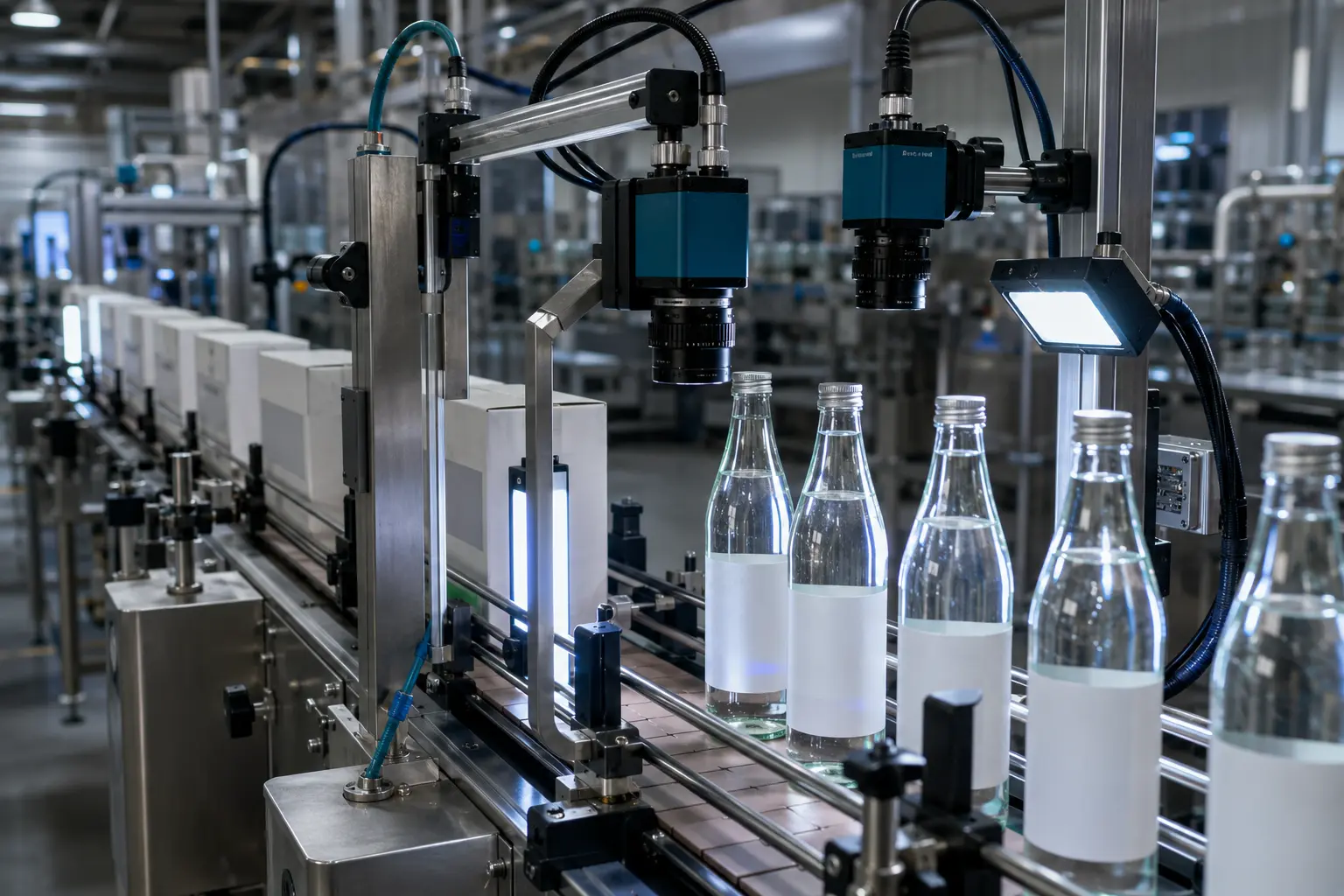
Define which label edges, graphics or codes provide the most stable reference
Select multi-camera or wraparound imaging where one view cannot cover the label
Control glare on varnished films, glass and clear labels using lighting and polarisation
Link label recipes to the production order or line selection process
Separate application-position faults from print or identity faults in operator messages
Track each inspected pack reliably to the reject device
We reduce risk early by proving the inspection on representative products before final hardware, handling and controls are committed.
Agree the pack, defect, speed, reject risk, data needs and acceptance criteria.
Run feasibility tests using representative good, bad and borderline samples.
Design handling, cameras, lighting, controls, guarding and rejection as one station.
Build, validate, install, train and support the system in production.
Need an answer for your exact product or line? Send us the application details and we will identify the next useful test.
Ask an application questionYes. Depending on bottle shape and line speed, we may use several cameras, line-scan imaging or controlled rotation to build full circumference coverage.
Yes. It can compare artwork features, colour, text, barcodes, OCR data or a database record. The method is selected around the identifiers available on each variant.
Often yes, but edge contrast and reflections require careful lighting and sample trials. Filled and empty containers can behave differently, so representative conditions matter.
Yes. Cameras can inspect both panels after application, check relative position and verify that the two labels form the correct pair.
Send product details, target output, examples of acceptable and failed packs, and a short line video. We will define the most useful next technical step.