Product handling
Convey, space, stabilise, guide, rotate or index the product so every critical feature reaches the inspection window consistently.
Integrate cameras, product handling, PLC controls, guarding and verified rejection into a new station or an existing production line.
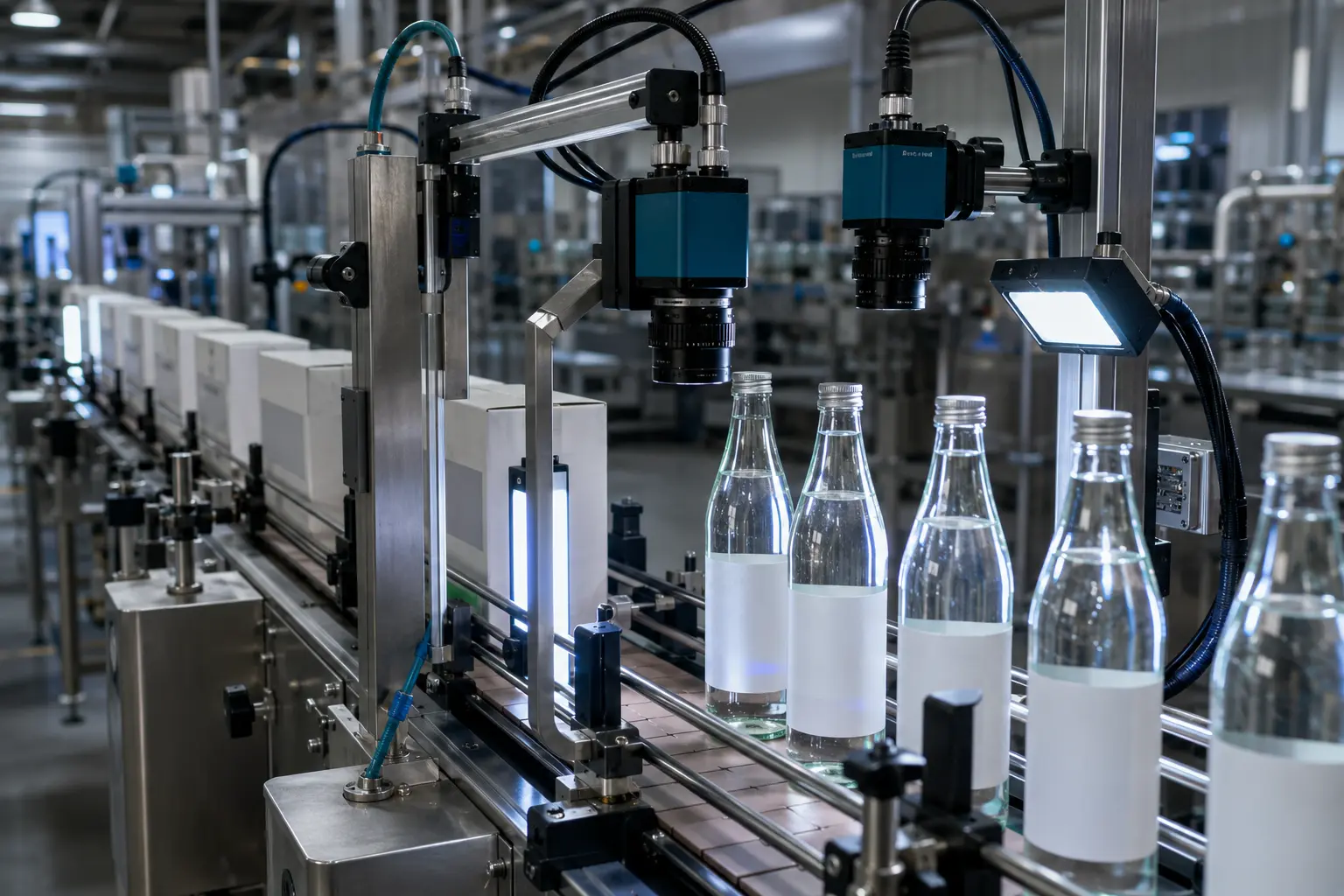
A production inspection must know when a product arrives, capture the right evidence, return a decision on time, track the exact item, remove it positively and create a controlled fault if any part of that chain is lost.
As a UK machine vision system integrator, we engineer the mechanics, optics, software, PLC interfaces, data, guarding and reject functions together. Retrofit projects begin with the available line space, conveyor behaviour, control ownership and production constraints—not with a stand-alone camera.
Each layer has a measurable job. The acceptance plan challenges the interfaces as well as the individual devices.
Convey, space, stabilise, guide, rotate or index the product so every critical feature reaches the inspection window consistently.
Select cameras, lenses, filters, exposure and controlled illumination against the smallest feature and full process variation.
Apply rules, measurement, OCR, code reading, database comparison or AI using controlled recipes and thresholds.
Coordinate triggers, product identity, ready/fault states, recipes, tracking and production interlocks with existing equipment.
Remove the intended product, verify the event, secure rejects and stop the line safely when control cannot be confirmed.
Record the results and evidence the process needs, provide useful diagnostics and make the system maintainable by site teams.
This sequence keeps performance assumptions visible and gives acceptance a clear technical basis.
Document inspection features, defect classes, line rate, formats, interfaces, environment, data and reject response.
Review good, bad and borderline samples plus video, drawings and real production variation.
Prove the sensing method, define image quality and identify handling or process changes needed for reliable inspection.
Complete mechanical, electrical, controls, software, data, guarding and reject design around the agreed architecture.
Develop recipes, challenge inspection limits, test changeovers, simulate faults and verify rejects at agreed conditions.
Integrate line signals, commission with production, train users and establish support, backup and change-control routines.
Project scope can include guarding, emergency stops, isolation, safety interlocks, operating and maintenance information, risk-assessment inputs, declarations and validation support appropriate to the supplied system.
Final conformity route, performance levels, hygiene requirements and acceptance documentation are agreed from the machine boundary and intended use. Equipment must also be installed, used and maintained under the site's applicable duties and procedures.
A short application review can expose the key constraints early.
We need the product and pack formats, target output, representative good and failed samples, line video or drawings, available space, upstream and downstream equipment, required records and the intended reject response.
Yes. We agree signal ownership, ready and fault states, trigger and result handshakes, recipe control, reject tracking and any required industrial-network interface with the line controls team.
Yes. We survey available space, product pitch, conveyor stability, PLC interfaces, guarding, reject distance and changeover needs, then design the inspection station around the live process. Trials confirm the sensing method before the final retrofit layout is committed.
Acceptance criteria are agreed before build and then challenged with representative samples, speed conditions, recipe changes, fault cases and reject tests. The exact documentation is defined in the project scope.
Yes. Operator and maintenance training, system documentation, spares and support options can be included according to the project and site needs.
Send product details, target output, examples of acceptable and failed packs, and a short line video. We will define the most useful next technical step.