Primary packs
- Bottle inspection
- Jar inspection
- Pouch inspection
- Carton inspection
- Tray and sleeve inspection
- Cap and closure inspection
Inspect packaging condition, identity and completeness across the formats your line actually runs—from individual containers to finished cases and pallets.
Different packs create different optical challenges. Curved glass reflects light, films wrinkle, cartons vary in print, and pallet loads require wide fields of view. We combine the right camera views and lighting techniques into one coordinated inspection and reject strategy.
Each check is configured against agreed samples, tolerances and fault responses. Multiple checks can be combined into a single inspection recipe.
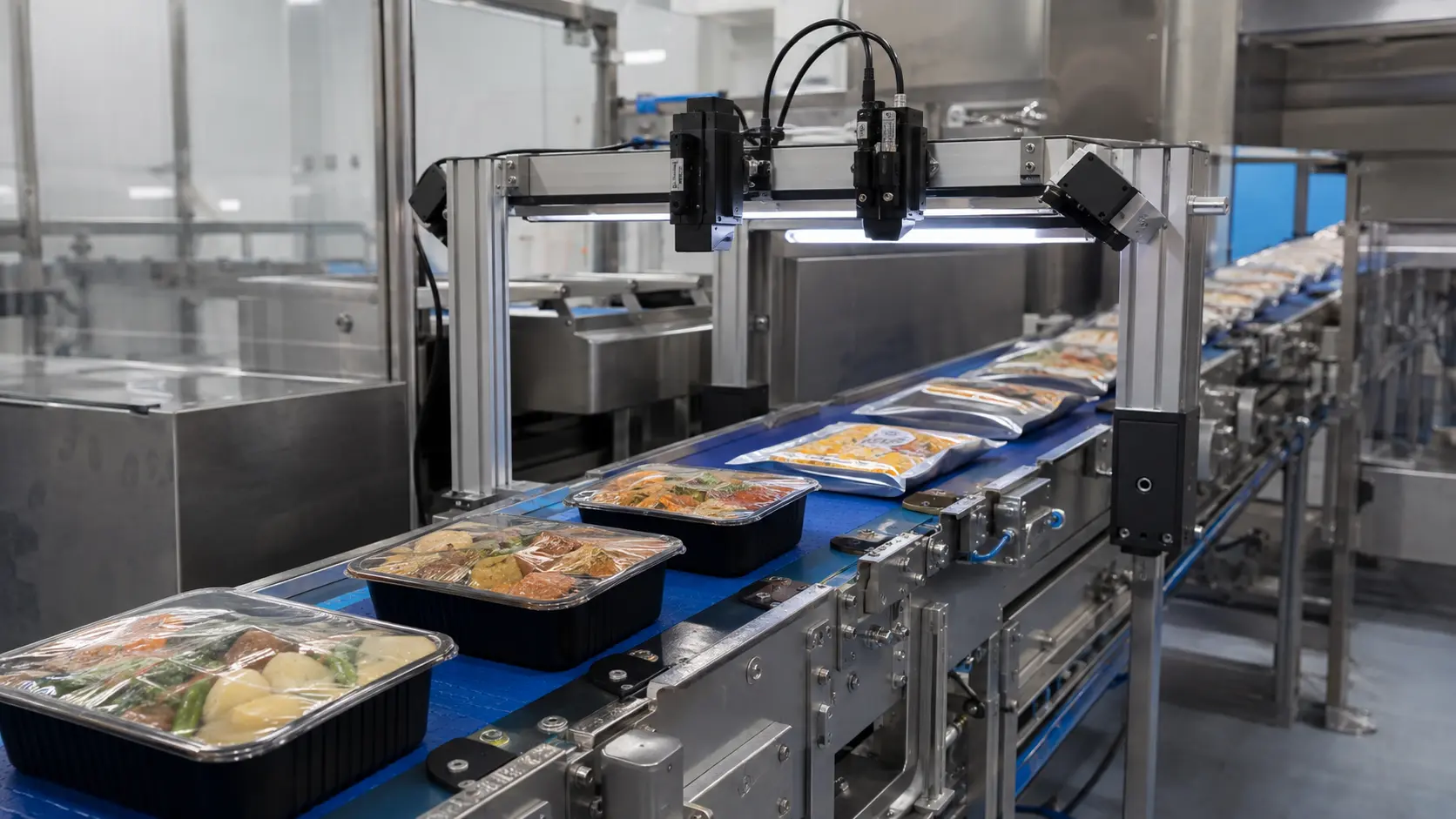
Map every critical-to-quality feature to a camera view and reject decision
Use polarisation, backlighting or diffuse illumination to manage reflective materials
Track products between several camera stations and a common reject point
Coordinate recipes with upstream fillers, cappers, labellers and coders
Separate presentation problems from genuine pack defects in alarm reporting
Provide maintenance access and cleanable construction appropriate to the line environment
We reduce risk early by proving the inspection on representative products before final hardware, handling and controls are committed.
Agree the pack, defect, speed, reject risk, data needs and acceptance criteria.
Run feasibility tests using representative good, bad and borderline samples.
Design handling, cameras, lighting, controls, guarding and rejection as one station.
Build, validate, install, train and support the system in production.
Need an answer for your exact product or line? Send us the application details and we will identify the next useful test.
Ask an application questionYes, where the handling and camera arrangement can cover the required formats. Recipes select tolerances and inspection regions; mechanical change parts or adjustable camera positions may also be needed.
Options include multiple cameras around the product, line-scan imaging, controlled rotation or a combination. The best method depends on line speed, label geometry and available conveyor length.
It can compare visible product or pack features, labels, artwork, codes and database records. The available identifiers and required level of assurance define the approach.
Yes. Typical end-of-line checks include count, orientation, label presence, code readability, closure condition, layer pattern and gross load appearance.
Send product details, target output, examples of acceptable and failed packs, and a short line video. We will define the most useful next technical step.