Capture stable evidence with controlled handling, optics and illumination.
Oxford Vision Systems · UK integration
Machine vision inspection systems
Machine vision inspection systems
for UK production lines
Integrated machine vision, checkweighing, code verification and fail-safe reject systems—engineered around your products, your risks and your production line.
Machine vision is only dependable when product handling, lighting, decision logic and rejection work as one system.
How we engineer the complete station
Inspection without gaps
From a single missing cap to complete pack verification.
Inspect product, packaging, print, code, seal, fill and weight in one coordinated control point. Every decision can be tracked to a suitable reject device, with confirmation, data and fault handling matched to the production risk.
Compare each product with approved limits, recipes or live data.
Reject the intended pack and prove the reject event completed.
Systems by inspection need
Find the control point your line is missing
Start with the failure mode you need to prevent. We will define the cameras, weighing, sensing, software, handling and rejection needed to control it.
01
Explore system
02
Explore system
03
Explore system
04
Explore system
05
Explore system
06
Explore system
07
Explore system
08
Explore system
09
Explore system
10
Explore system
11
Explore system
Machine-Vision Inspection Systems
In-line machine vision inspection systems for presence, orientation, colour, shape, counting, dimensions and surface defects on UK production lines.
Smart-Camera Inspection Systems
Compact industrial smart-camera inspection systems for presence, position, colour, code and quality checks with PLC and reject integration.
Artificial-Intelligence Vision Inspection
Industrial AI vision inspection for variable defects, complex surfaces and classification tasks, engineered with controlled imaging and production validation.
Packaging Inspection Systems
Vision inspection for bottles, jars, pouches, cartons, trays, sleeves, caps, cases and pallets with multi-camera checks and reject integration.
In-Line Checkweighers
Food, pharmaceutical, bottle, jar, carton, pouch and sachet checkweighers with reject systems, production data and filler feedback.
Label Inspection Systems
In-line label inspection for missing, skewed, misplaced, wrong and poor-quality labels including front/back and wraparound verification.
Barcode and Code Verification Systems
In-line barcode presence, readability and grading plus QR, Data Matrix, GS1, serial-number and product-to-label verification.
Date and Batch Code Inspection Systems
Best-before, use-by, batch, lot, inkjet, laser and thermal-transfer code inspection using OCR, OCV and automatic rejection.
Seal Inspection Systems
Vision inspection for heat seals, tray and pouch seals, contamination, folds, missing film, tamper evidence and induction-seal presence.
Fill-Level Inspection Systems
Liquid, powder, tablet and capsule fill inspection for transparent and opaque packs using vision, sensors or X-ray with filler feedback.
Automatic Reject Systems and Conveyors
Pusher, air-blast, drop-flap, retracting-belt, swing-arm and lane-divert rejects with verification, lockable bins and fail-safe monitoring.
Systems matched to your line
Focused inspection solutions for high-risk applications
Use these application pages to compare checks, handling, data and reject requirements before discussing a system.
Inspection on real production lines
See where quality escapes are stopped
Each station is engineered around your product presentation, line speed, defect risk and required reject action—not around a generic camera specification.
Pack integrity
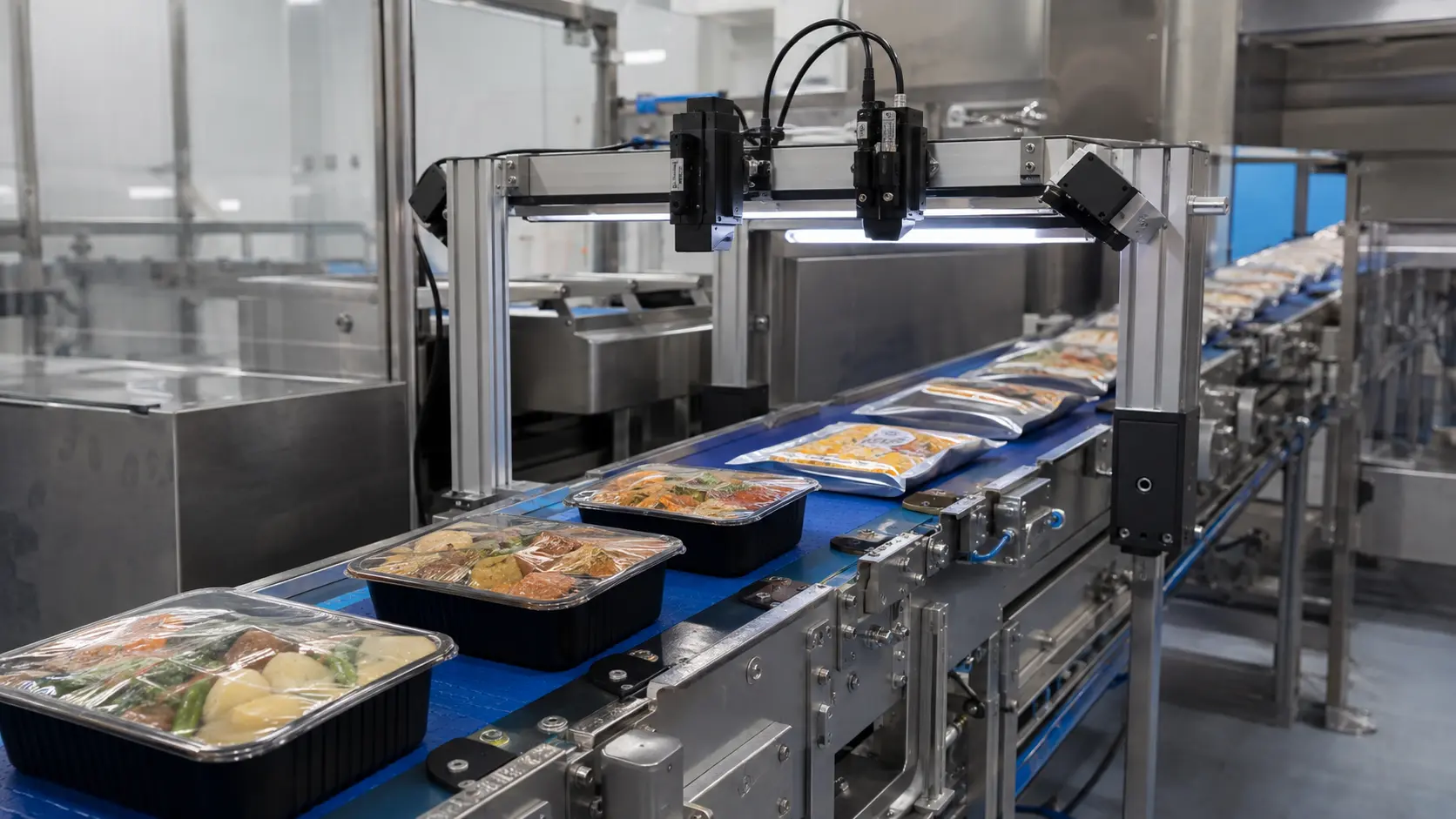
Seal and lidding inspection
Detect visible contamination, folds, wrinkles and missing film before failed packs leave the line.
Contents control
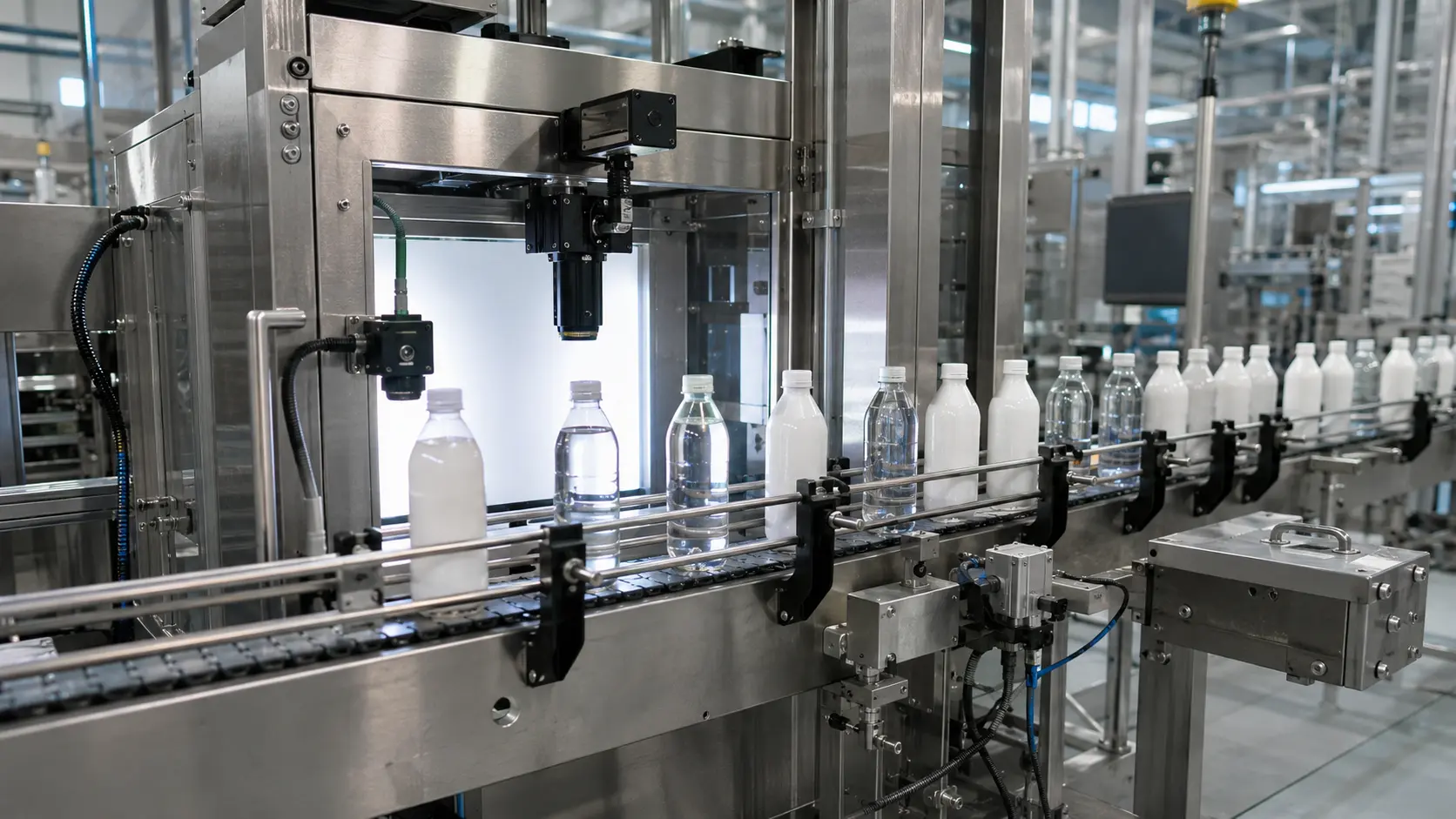
Fill-level and content checks
Identify underfill, overfill and missing contents, with trend data and filler feedback where required.
Identity and traceability
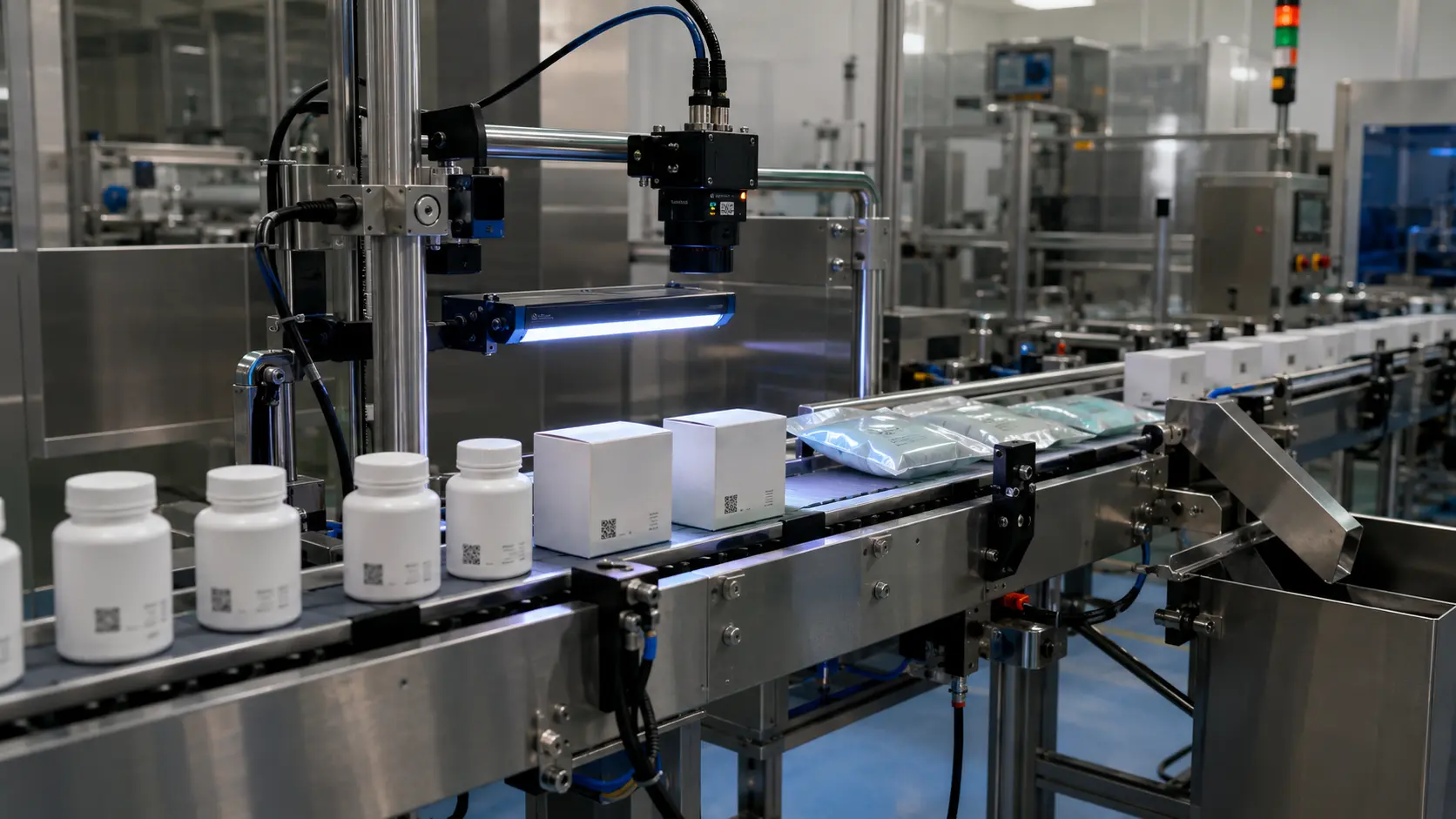
Label, barcode and date-code verification
Match the right product to the right label and verify readable, correct production codes in-line.
Product quality
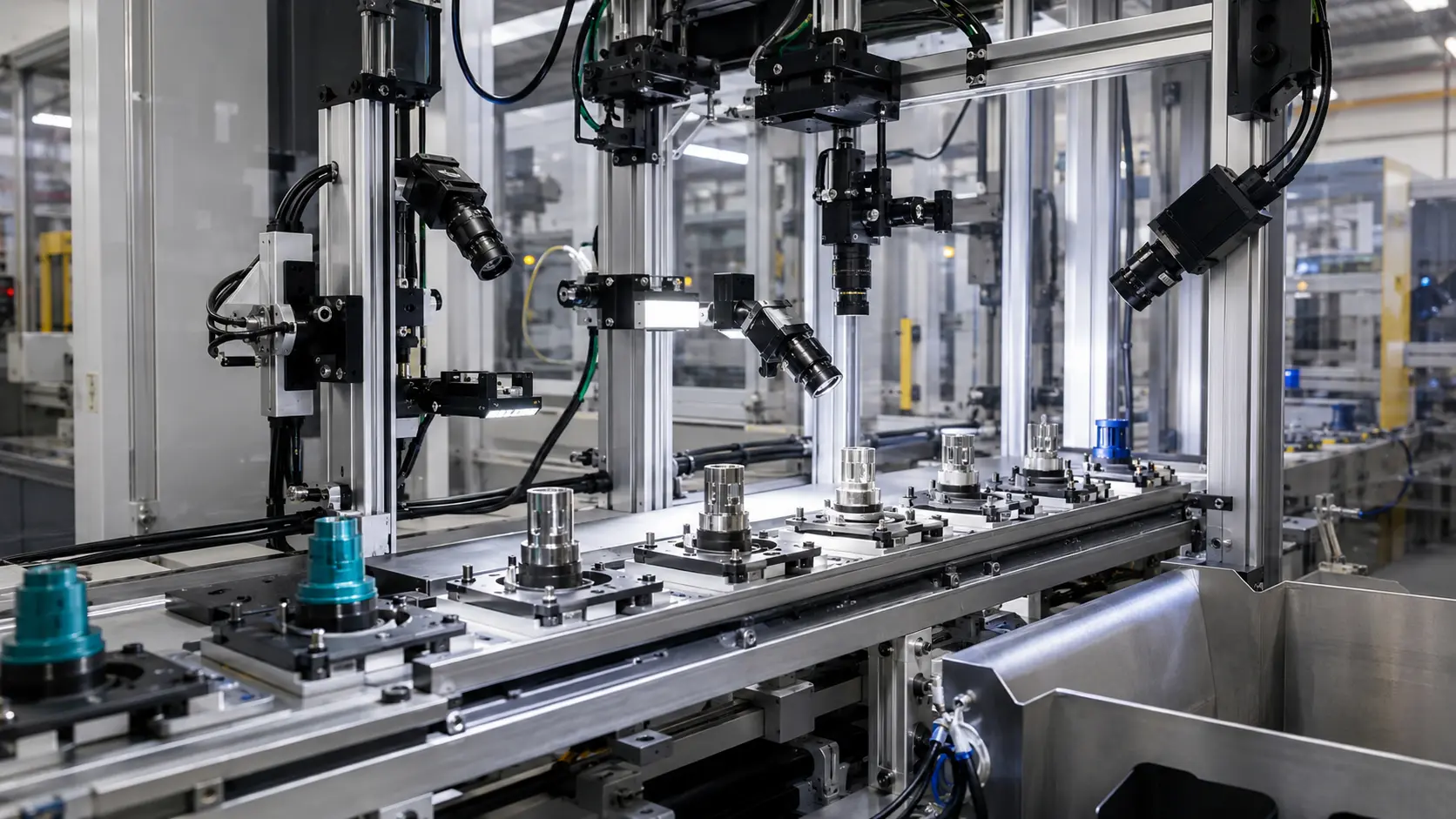
Component and AI vision inspection
Check assembly, orientation, colour, shape, dimensions and variable surface defects at production speed.
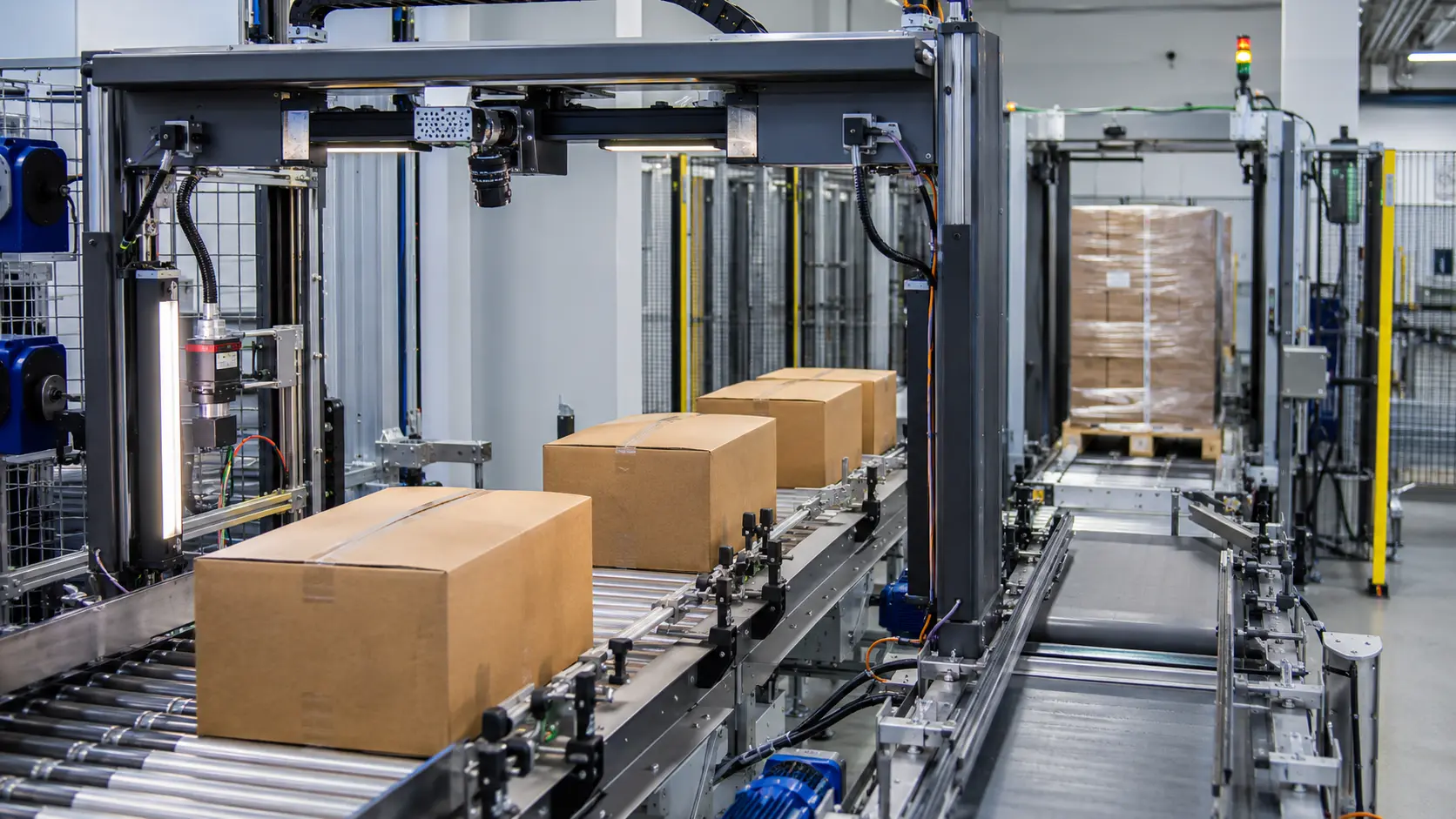
End-of-line assurance
Case, pallet and reject verification
Confirm counts, labels, codes, orientation and pallet patterns, then divert failures through a monitored reject route.
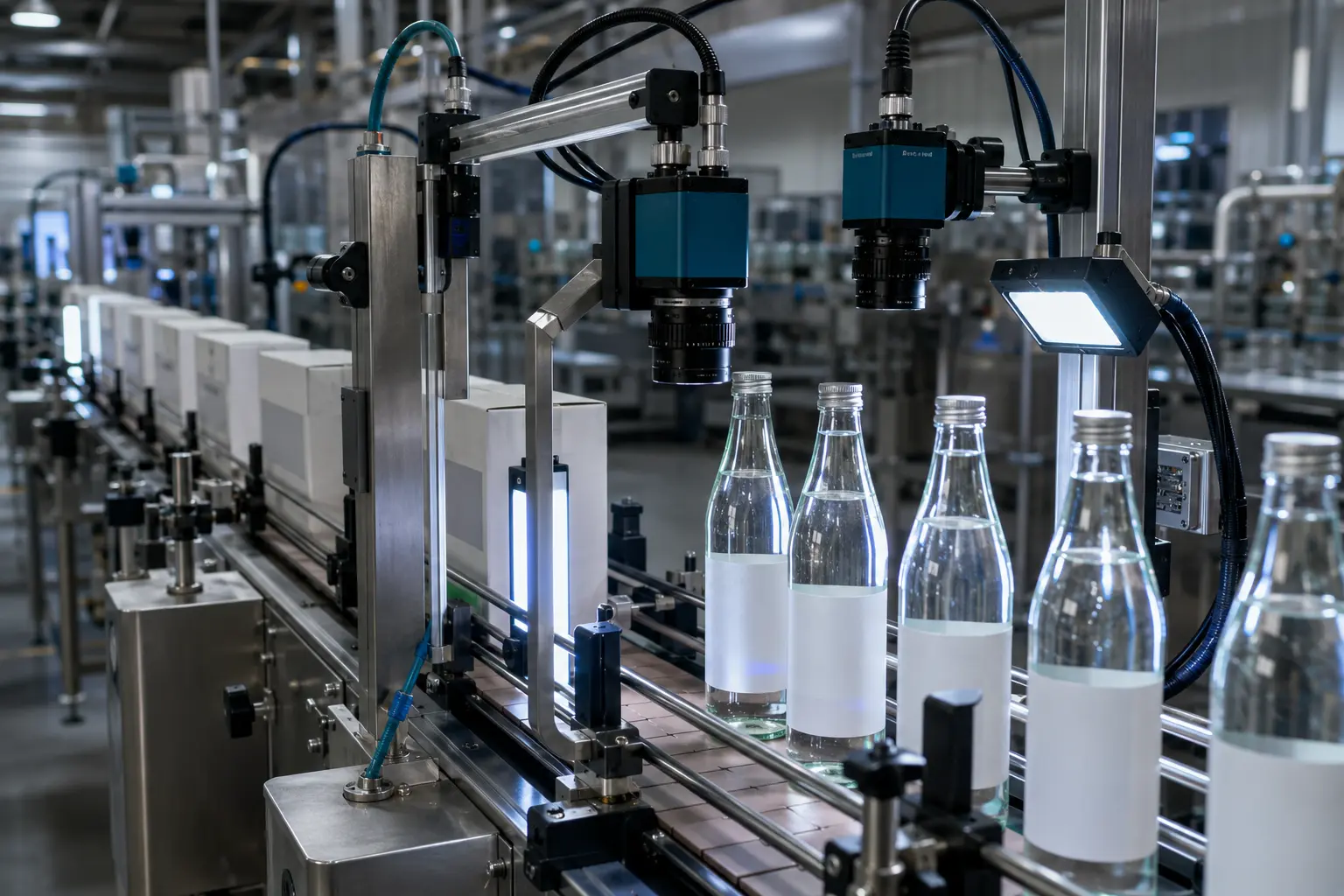
Stable imageReliable decision
Own the complete inspection
A camera cannot compensate for an uncontrolled process.
We engineer the mechanical and control conditions that let inspection work: product guides, pitch control, triggers, lighting enclosures, camera mounts, recipe handshakes, reject tracking and fault logic.
- 01Present
Guide, space or rotate the product so critical features are visible.
- 02Capture
Freeze the product with the correct lens, exposure and illumination.
- 03Decide
Apply validated rules, comparisons or models to every product.
- 04Act
Track, reject, confirm, record and stop safely if control is lost.
Packages and production
Inspect the format—not an idealised sample
Curved, reflective, flexible, transparent and opaque packs each demand different handling and imaging. We prove the method against real product variation.
Bottles & jars
Fill level, cap, tamper evidence, labels, codes and container condition.
Pouches & sachetsSeal area, print, codes, fill, orientation and pack presence.
Cartons & sleevesArtwork, closure, leaflets, labels, serialisation and print quality.
Trays & liddingSeal contamination, film presence, wrinkles, print and product count.
Cases & palletsCount, orientation, case labels, barcodes, pallet pattern and load checks.
ComponentsPresence, assembly, orientation, dimensions, surfaces and classification.
Project pathway
Prove the inspection before you commit the line
The most useful first step is evidence: representative packs, real defects, process variation and the operating conditions the system must handle.
Application review
Product, defect, formats, speed, line layout, interfaces and reject risk.
Feasibility trials
Controlled tests with good, failed and borderline production samples.
System engineering
Handling, imaging, weighing, controls, data, guarding and rejection.
Build & acceptance
Build, recipe development, challenge testing and documented acceptance.
Site integration
Installation, line handshakes, commissioning and operator training.
Industries
Designed around the production environment and the consequence of failure.
Hygiene, validation, data, material handling and reject control differ by sector. The system architecture should reflect those differences from the start.
Explore industries
01Food & beverageHygienic construction, washdown-conscious design and pack integrity
02Pharmaceutical & healthcareControlled access, records, serialisation and reject security
03Cosmetics & consumer productsArtwork, colour, cosmetic quality, closure and content checks
04Industrial manufacturingComponents, assembly, surfaces, dimensions and orientation
Straight answers
Machine vision and inspection FAQs
Every application has its own inspection window. These answers explain how we turn the requirement into a practical production project.
What does Oxford Vision Systems supply?
We engineer machine-vision inspection, smart-camera, AI vision, checkweighing, label and code verification, seal and fill-level inspection, conveyors and automatic reject systems for production lines.
Can you inspect products on an existing production line?
Yes. We survey product presentation, speed, spacing, controls, available conveyor length, guarding and reject position, then define a retrofit station around the live line.
Do you run product trials before quotation?
Where feasibility or performance depends on the product, we ask for representative good, failed and borderline samples and prove the proposed optical or weighing method before final commitment.
Can one system combine vision, weight and code checks?
Yes. Cameras, code readers, checkweighers and sensors can share product tracking, recipes, operator controls, data capture and a coordinated reject strategy.
Which industries do you support?
Typical projects serve food and beverage, pharmaceutical and healthcare, cosmetics, chemicals, household products, logistics and general manufacturing across the UK.
What makes a machine vision feasibility trial useful?
Define the accept-or-reject decisions and collect representative good, bad and marginal samples. Include the real presentation, speed and environmental variation. Agree how results will be measured and how the correct product is tracked to the line response, with limitations and unresolved inspection requirements recorded in the trial report.
- Representative good and defect samples
- Normal production variation
- Decision handling and acceptance criteria
Related guidance: Machine vision · AI vision inspection