Seal and pack
- Visible seal contamination
- Open or incomplete visible edges
- Folded and wrinkled seals
- Missing or displaced film
- Torn or deformed packs
- Pack presence and orientation
Check visible seals, contamination, fill, print, labels, codes and pack presentation—then reject and confirm failed flexible packs.
An in-line pouch or sachet inspection system checks the visible pack features that protect product quality and identity: seal area, pack shape, contents or fill, printed data, artwork, labels and codes. Cameras, sensors or checkweighing are selected around the product and film.
Flexible packaging changes shape in motion. The conveyor, guides, lighting, triggers and reject timing are therefore part of the inspection—not accessories added afterwards.
The agreed inspection window is proved with normal product variation plus representative good, bad and borderline packs.
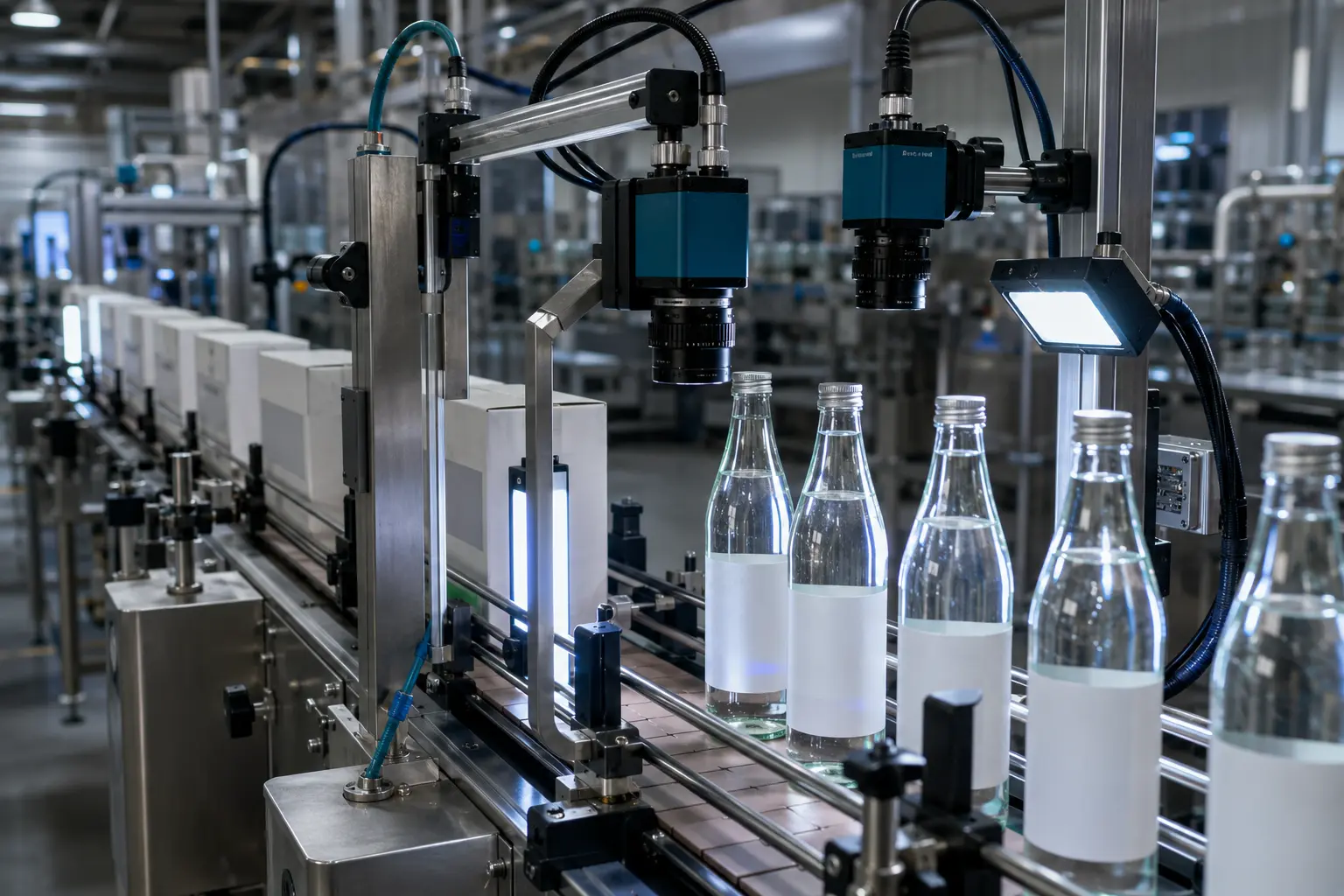
Belts, guides, vacuum handling or controlled transfers keep the inspection area within the camera view.
Triggering is selected to cope with variable pitch, edges and pack movement.
Diffuse, backlit or polarised illumination manages glare, transparency and printed film.
Inspection regions follow the actual seal and artwork geometry rather than a nominal rectangle.
A suitable pusher, air blast, drop-flap or retracting-belt reject handles the pack without creating a second failure.
A camera is powerful when the defect is visible. It should not be used to claim an invisible seal or content property that requires another sensing principle.
Use for visible seal geometry, contamination, pack shape, artwork, labels, codes and exposed contents.
Use for underfill, overfill or missing contents when the weight difference exceeds normal variation.
Use leak, pressure, vacuum or another validated method when microscopic channels or hermetic performance must be proved.
Coordinate results, records and reject handling under one product recipe where several risks must be controlled.
Representative film, filled packs and real seal defects are essential for feasibility work.
Ask an application question →It can inspect visible seal contamination, folds, wrinkles, open edges, missing film, pack presence and orientation, labels, artwork, barcodes, date or batch codes and visible fill or contents, depending on presentation.
Not by vision alone. Cameras can inspect visible seal geometry and contamination, but hidden channels or microscopic leaks may require a separate leak, pressure, vacuum or other integrity test.
Often yes. Lighting, filters, camera angle and background are selected around film transparency, gloss, print and product appearance, then confirmed with representative samples.
Yes where fill level is visible or the weight difference is distinguishable. Vision, sensing or dynamic checkweighing can provide the result for a tracked and verified reject system.
Send film and pack samples, good and failed seals, line speed and a short production video.