Metal detection
- Ferrous metal detection
- Non-ferrous metal detection
- Stainless-steel detection
- Product-effect assessment
- Test-piece procedures
- Aperture sized for the pack
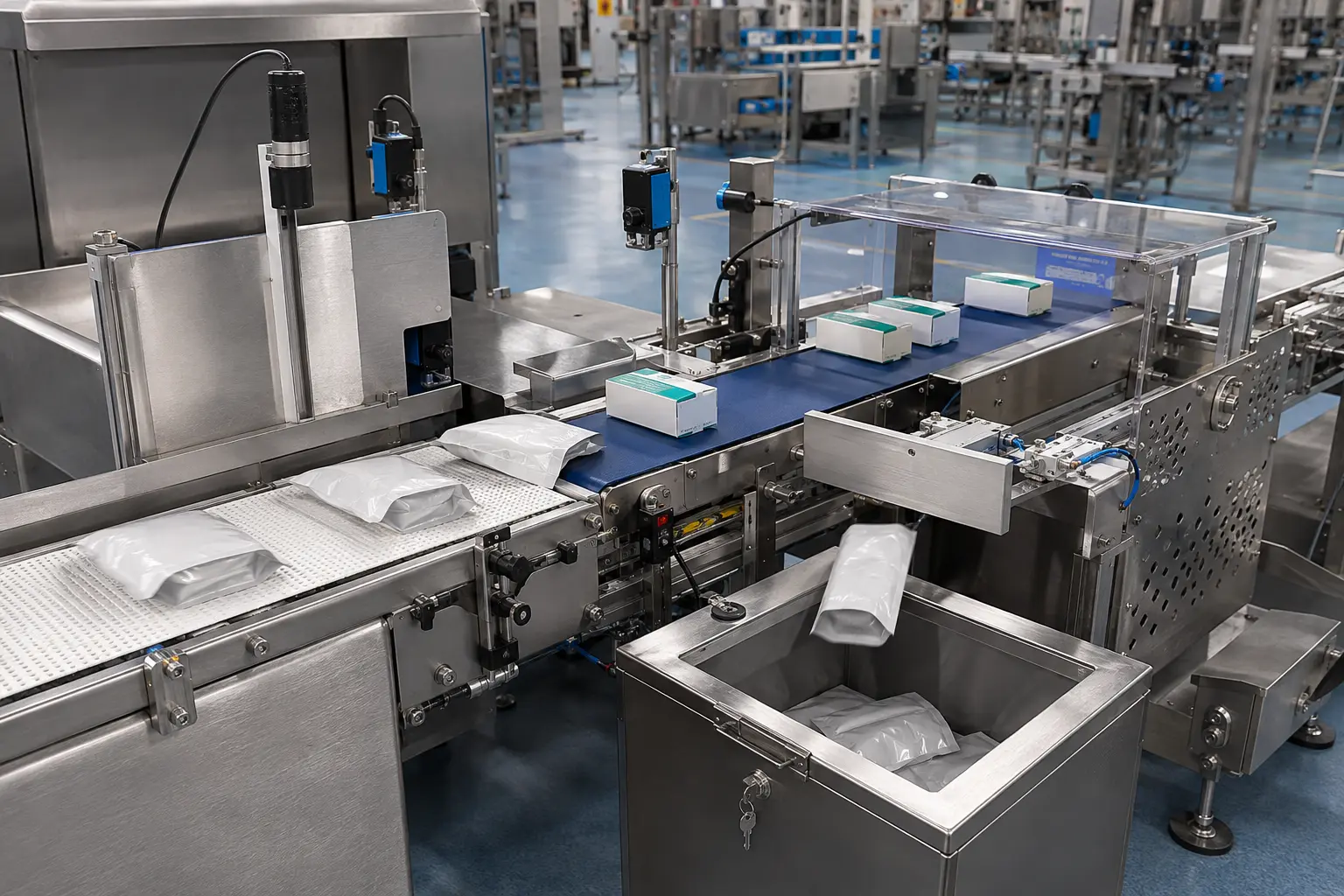
Detect metal contamination and underweight or overweight packs in one coordinated in-line system with production data and verified automatic rejection.
A combination system shares product transfer, control architecture and floor space while retaining two distinct inspection decisions. The design can simplify line integration, reporting and operator use—but only when aperture, belt geometry, weighing time and rejection are specified together.
The mechanical and control arrangement is configured for the actual pack, contaminant standard, weight limits, production environment and line speed.
Pack dimensions, weight range, material, orientation and centre of gravity.
Target speed, product spacing, conveyor height, transfers and available length.
Required metal-detection standard, test pieces and known product effect.
Weight tolerances, expected variation, filler feedback and reporting needs.
Cleaning regime, ingress protection, temperature, draught and vibration conditions.
Pusher, air blast, drop flap, retracting belt or stop-and-alarm arrangements are chosen around pack behaviour and risk. Reject confirmation, guarded bins and fault monitoring can be included.
Record the metal-detection or weight failure against the tracked pack.
Maintain product identity from inspection point to reject point.
Remove the failed pack without disrupting acceptable production.
Confirm the reject event and trigger the agreed fault response if it fails.
Share your pack, target speed, line layout and inspection standard for a system review.
Ask an application question →It combines in-line metal contaminant detection and dynamic weight checking on a shared conveyor platform, normally with coordinated controls, product recipes, records and automatic rejection.
A combination system can reduce line length, simplify product handling and provide one coordinated inspection and reject point while controlling both contaminant and weight risks.
Yes, subject to layout and risk assessment. Separate reject devices or segregated bins can identify metal-detection and weight failures, with reject confirmation and bin-full monitoring where required.
Send pack dimensions, speed, weight limits, test-piece requirements and available line space.