Pack integrity
- Tray- and pouch-seal contamination
- Folded, wrinkled or open seals
- Missing or misplaced lidding film
- Cap and closure presence
- Tamper-evident features
- Damaged pack detection
Inspect pack integrity, identity, variable data, fill and weight at production speed—then remove failed packs with a reject system designed for the risk.
A food packaging inspection station can combine machine vision, smart cameras, code readers, checkweighing and sensors around shared product tracking. The result is one clear pack decision, coordinated rejection and useful production data.
Start with the customer complaint, recall or giveaway risk. We then select the simplest dependable inspection method for each failure mode.
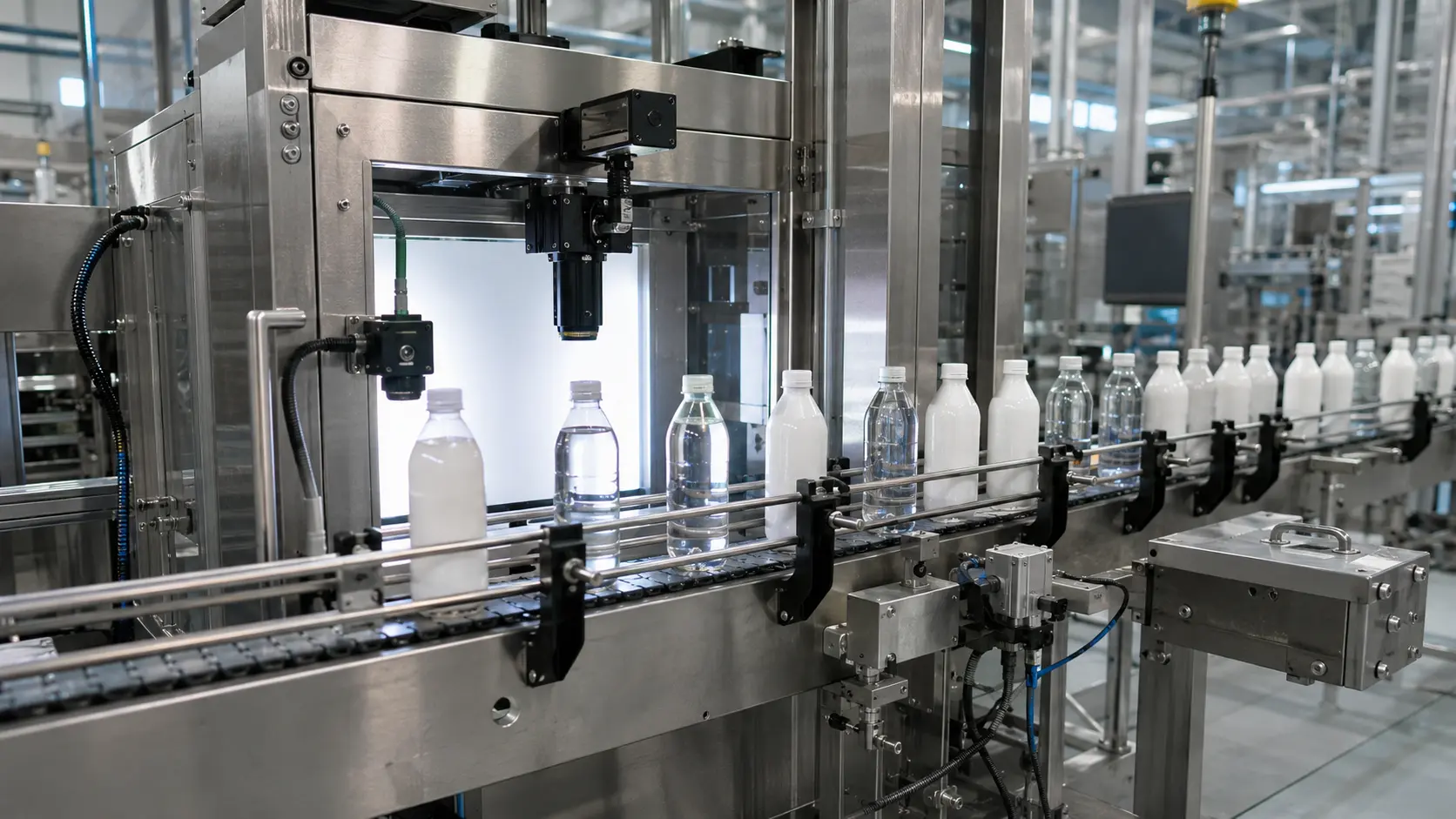
Vision suits visible pack, label, print, colour, shape and component checks.
Checkweighing identifies total-content and completeness differences when a stable weight window exists.
Specialist sensing can address opaque containers, hidden fill levels or seal characteristics that standard imaging cannot see.
Combined inspection is used when no single technology controls the complete risk.
We assess cleaning, belt transfers, pack spacing, line speed, vibration, condensation, guarding, operator access, data requirements and the safe reject position before hardware is fixed.
Agree good, failed and borderline packs plus the required response.
Trial representative samples under controlled imaging or weighing conditions.
Coordinate handling, inspection, controls, guarding and rejection.
Commission recipes, challenges, fault handling, records and training.
Send a line video, pack samples and the defects you need to stop for an application review.
Ask an application question →A coordinated system can inspect seal condition, lidding film, label presence and position, date and batch codes, barcodes, fill level, pack completeness and weight, then reject failed packs automatically.
Yes. Construction, ingress protection, access, belt materials, hygienic detailing and electrical components are specified for the actual cleaning regime and production zone.
Yes. Vision, weighing, code readers and sensors can share product tracking and a coordinated reject station, provided reject timing and pack control are engineered for the line.
Share pack samples, defect examples, target output, cleaning regime and a short line video.