Fill and bottle
- Liquid and powder fill level
- Underfill and overfill
- Transparent and opaque containers
- Bottle shape and orientation
- Visible chips, cracks and surface defects
- Bottle and jar checkweighing
Inspect fill level, caps, tamper evidence, labels, barcodes, date codes and container condition—then reject the intended bottle with confirmation.
A cap may be present but tilted. A label may be present but wrong. A code may be readable but belong to another product. We combine the views, lighting, code data, product tracking and reject response needed to verify the whole pack.
Checks can run together under one product recipe and produce a single pass/fail decision or fault-specific result record.
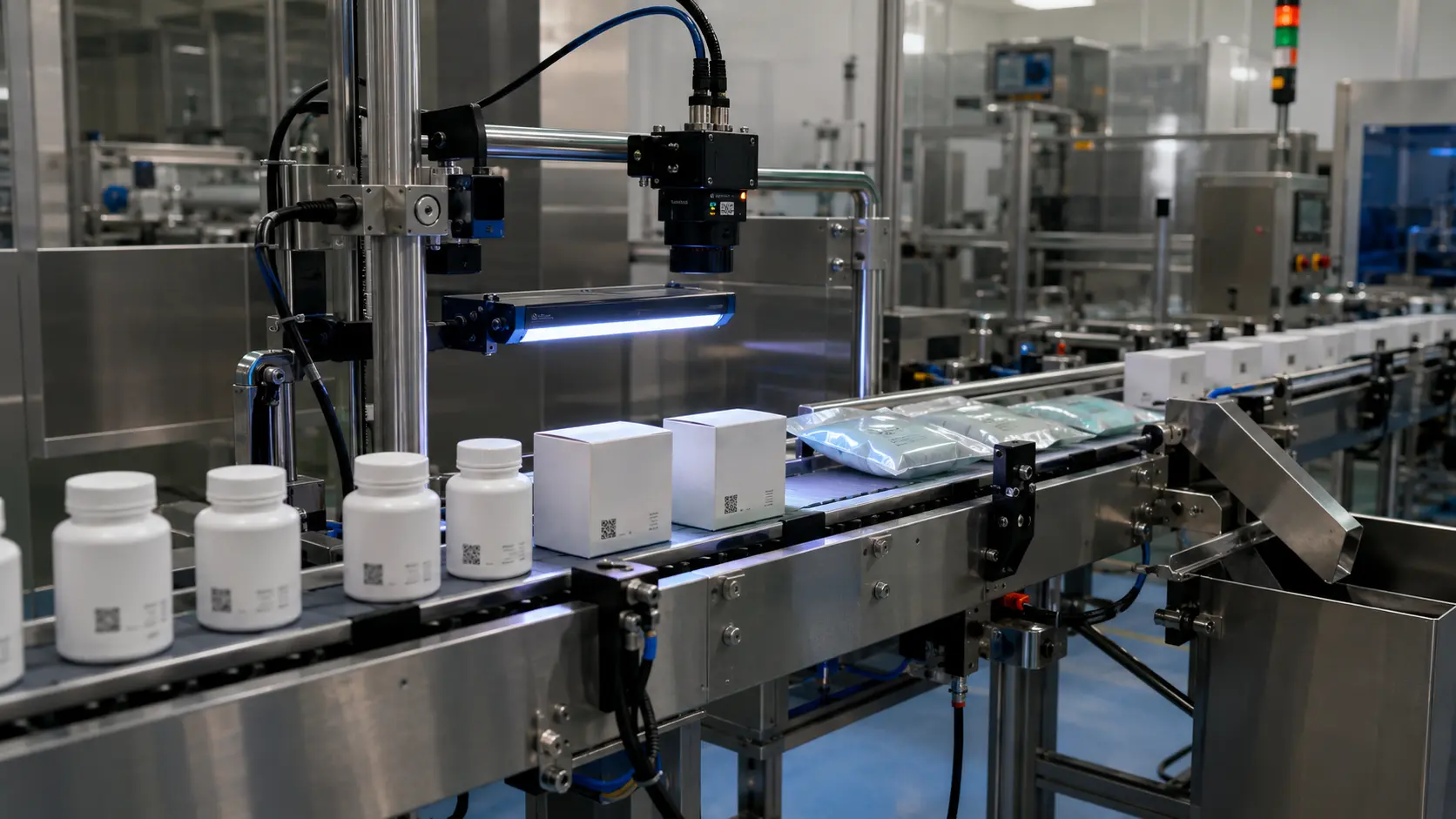
Opposed or multiple side cameras cover labels, fill level and container profile.
A top camera checks caps, closure colour, print and tamper features.
Mirror or wraparound optics can reduce blind spots on cylindrical containers.
Controlled bottle rotation may be used when the complete circumference must be seen.
Backlighting, diffuse lighting or polarisation is selected for the container and surface.
Guide rails, spacing, vibration, bubbles, foam, label gloss, bottle rotation and line accumulation can all affect inspection. Trials and line observation establish the dependable operating window.
Stabilise spacing, orientation and height through the inspection zone.
Create contrast across clear, coloured, reflective or opaque containers.
Apply the correct rule, code comparison or AI classification to each view.
Track and remove the failed bottle with confirmation and fault handling.
Representative containers, labels and defect samples are the best starting point.
Ask an application question →It can inspect fill level, cap presence and seating, tamper bands, label presence and position, printed codes, barcodes, container shape and visible surface defects, depending on the pack and camera access.
Yes, but standard visible-light vision may not see through an opaque container. Alternative sensing or X-ray may be required after trials with the product and packaging.
Yes. Multiple cameras, wraparound optics or controlled bottle rotation can provide side, top and underside views. The best arrangement depends on bottle stability, speed and the smallest defect.
Send containers, good and failed samples, line speed and a short production video.