Suitable applications
- Natural product variation
- Surface and texture defects
- Complex cosmetic inspection
- Anomaly detection
- Multi-class sorting
- Difficult background separation
Apply learning-based inspection to variable defects and complex appearance—without losing the engineering discipline needed for a dependable production system.
AI can improve inspection where acceptable variation and genuine defects overlap in ways that are difficult to describe with fixed rules. The model is only one part of the system. Stable imaging, representative samples, disciplined labelling, threshold selection, drift monitoring and a clear fallback strategy remain essential.
Each check is configured against agreed samples, tolerances and fault responses. Multiple checks can be combined into a single inspection recipe.
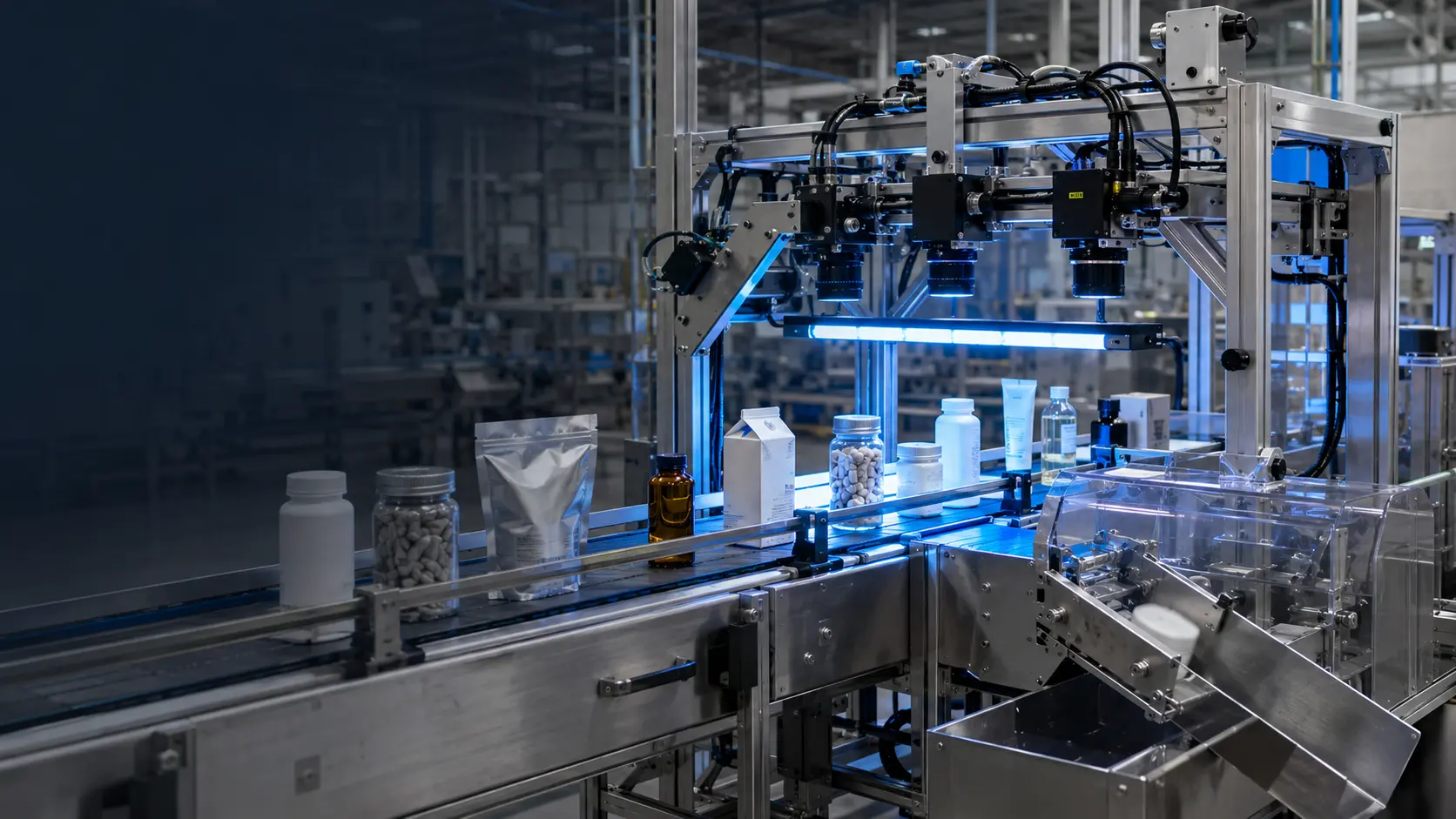
Establish whether AI adds measurable value over conventional vision tools
Build the dataset from real process variation rather than ideal laboratory images
Keep training, validation and final challenge samples separate
Agree how low-confidence results are handled in production
Record model identity and inspection parameters with each deployed recipe
Plan for change control when products, artwork, materials or lighting conditions change
We reduce risk early by proving the inspection on representative products before final hardware, handling and controls are committed.
Agree the pack, defect, speed, reject risk, data needs and acceptance criteria.
Run feasibility tests using representative good, bad and borderline samples.
Design handling, cameras, lighting, controls, guarding and rejection as one station.
Build, validate, install, train and support the system in production.
Need an answer for your exact product or line? Send us the application details and we will identify the next useful test.
Ask an application questionAI is useful when defects vary in appearance, good products have natural variation, or a rules-based method becomes overly complex. It should be chosen because trials show a practical benefit, not simply because the technology is available.
There is no universal number. It depends on variation, defect classes, image consistency and the performance target. We start with a sample plan and review the distribution of good, bad and borderline examples.
A system can show the source image, confidence and highlighted region, but model outputs are probabilistic. The acceptable level of interpretability and evidence should be defined for the application.
The change is assessed against the approved image space. Some changes only need a new recipe; others require additional samples, validation or model retraining before release.
Before accepting an AI inspection proposal, agree how two different errors will be reported: a defective item passed by the system and an acceptable item rejected. A single overall accuracy percentage can hide an important weakness when the challenge set contains many good products and few examples of the defect that matters most.
Create a labelled test set with quality staff and keep it separate from the images used to develop the model. Include normal appearance variation, the relevant defect classes and borderline examples that require a documented decision. For each class, record the number tested and the number accepted, rejected or sent for review. Set the pass criteria from the application risk and commercial consequence, rather than borrowing a headline percentage from another inspection.
Repeat the agreed challenge under production imaging and handling conditions. Changes in lighting, surface finish or presentation can affect what the camera sees, while reject timing determines whether the identified item is actually removed. Keep the image, decision, model or recipe version and physical reject outcome together where required. This makes the demonstration assessable and gives the operating team a clearer basis for future change control.
No. Review missed defects, false rejects and uncertain results separately, with counts for the relevant defect classes.
Use a separate agreed challenge set so the result tests performance beyond the images used to develop the model.
Review complete machine-vision systems Plan physical reject verification
Send product details, target output, examples of acceptable and failed packs, and a short line video. We will define the most useful next technical step.